Separate file processing from website activity
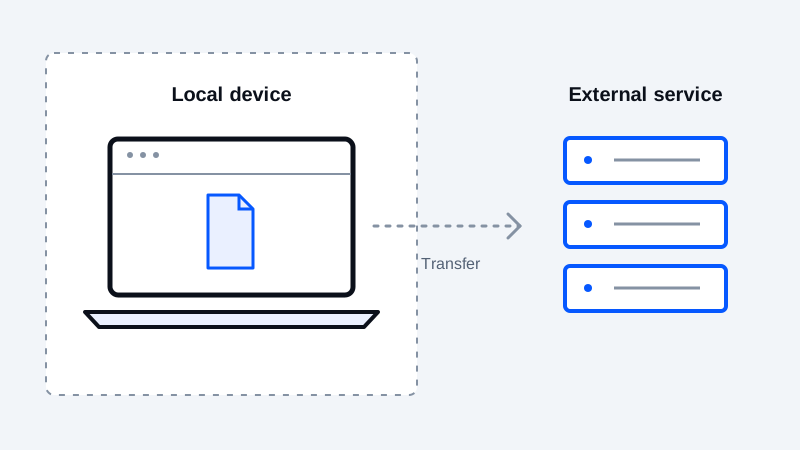
When choosing a converter, ask where the book's contents are processed. A server conversion normally requires sending the document to that service. A browser conversion can process a selected local file on your device. That difference matters, but it does not make every browser application automatically secure or every cloud service unsuitable.
Consider the actual application, the document's sensitivity and any rules that apply to your work. A privacy claim should describe a concrete operation rather than imply that no risks remain.
How MobiToEpub handles a local conversion
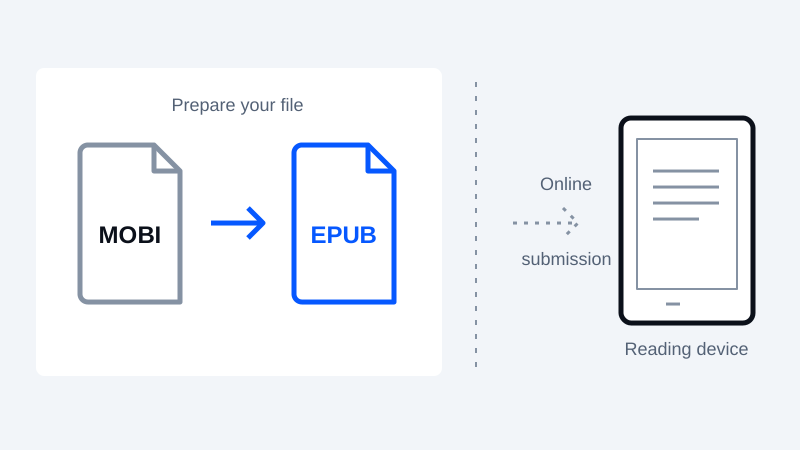
The MOBI-to-EPUB path reads a file you select, parses supported text using JavaScript, and packages an EPUB in the browser with JSZip. Other formats have their own local pipelines: EPUB-to-AZW3 export uses a local WebAssembly worker, while CBZ conversion packages comic images as fixed-layout EPUB. These local conversion paths do not upload the selected book to a conversion server; they are not a certified secure environment.
Selected local file
        ↓
JavaScript parsing in the browser
        ↓
EPUB packaged as a local Blob
        ↓
Download chosen by the reader
The parser is text-oriented and has format limitations. Local processing says where that work happens; it does not promise perfect output, legal compliance, or safe handling by every extension installed in the browser.
Network requests still occur
Opening this website requests pages, scripts and other assets. The website uses Google Analytics for usage measurement and Microsoft Clarity for page interaction analytics. Private book-related interface areas are masked for Clarity. Local book conversion therefore does not mean that browsing the site makes no network requests. Read the privacy page for the distinction.
URL import is another separate operation: the browser requests a file from its source website. That website can receive the request. Browser access controls may block an import, in which case downloading a permitted file yourself and selecting it locally may be the appropriate next step.
Sending a converted book to a third-party reading service is also separate. If you upload the output to Send to Kindle, for example, you have chosen to send that file to Amazon after conversion.
Understand memory and downloads
Conversion data and download objects can remain in browser memory while the page uses them. Browsers control memory reclamation; a finished download is not proof of immediate erasure. The downloaded EPUB and original file also remain wherever you saved them.
The reader can save bookmarks, highlights, notes and selected text excerpts in this browser's localStorage. These records may remain after closing the tab; clearing this website's site data removes that local storage. A new import is not a guaranteed way to restore earlier notes, and browser storage is not a backup. If storage is blocked or full, the reader shows a warning and changes may remain only in memory.
The web API URL.revokeObjectURL() releases an object-URL reference. It is a resource-management mechanism, not a secure-delete operation. MDN object URL documentation
Do not assume a fresh offline visit will work. Required scripts may need to be downloaded, and this site does not promise a fully installed offline application.
Make a decision using observable behavior
For a non-sensitive test file, a technical user can inspect browser network requests during selection, conversion and download. Review the complete request list rather than only looking for one HTTP method. Browser settings, extensions and later application updates can change the environment.
For a cloud tool, read the provider's stated processing, retention and sharing practices instead of assuming a universal retention period. For sensitive work, follow your organization's approved tools and handling requirements. Keep originals and inspect the output regardless of where conversion happens.
Keep your original. Try a new format.
Check converter availability and use DRM-free files you have permission to convert.
Open the converter